


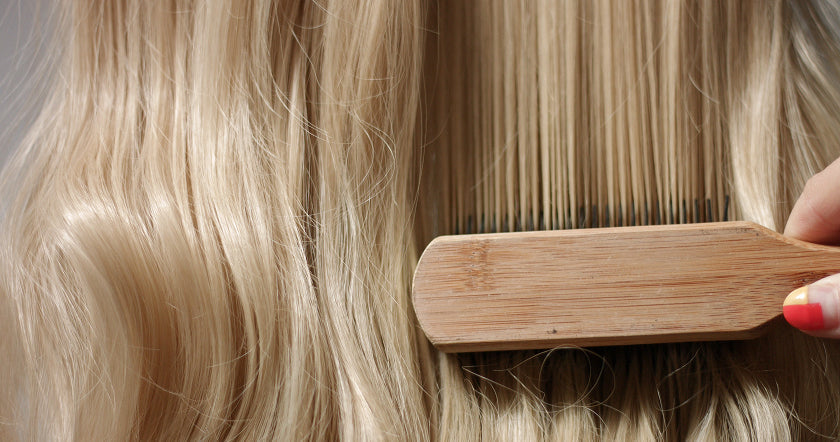
Hair extensions are an investment, and like any good investment, they need a little care to keep paying off. Whether you spent a little or a lot, the way you store your extensions has a huge impact on how long they last, how good they look, and how easy they are to wear day after day.
The good news? Proper storage is genuinely simple once you know the rules. In this guide, we cover every extension type: clip-ins, halo, tape-in, sew-in, and pre-bonded, with clear, practical steps for both new and pre-worn extensions. Follow these tips and your extensions will stay soft, tangle-free, and beautiful for far longer.
Why Proper Storage Matters
You might be tempted to toss your extensions on your dresser at the end of a long day, but that small habit can cause big problems over time. Here's what poor storage actually does to your hair:
The bottom line: proper storage significantly extends the lifespan of your extensions, saving you money and keeping your hair looking its best.
The 3 Golden Rules for All Extension Types
No matter which type you wear, these three rules apply every single time:
- Always brush before storing. Start at the ends and work your way up to the roots to detangle gently without causing breakage.
- Never store damp or wet. Damp extensions stored in a bag or drawer are a perfect environment for mildew and mould. Always air dry fully first.
- Keep out of direct sunlight and humidity. A cool, dry wardrobe is ideal. Bathrooms and sunny windowsills are the enemy of good extensions.
How to Store Clip-In Hair Extension
- Remove at the end of the day, never sleep in clip-ins. The friction and pressure from sleep will cause matting and can damage both the extensions and your natural hair.
- Brush through gently from ends to clips before storing. A soft-bristle or flexible extension brush works best.
- Use a dedicated hair extension hanger, look for a wide-grip bar or clip style that holds the weft flat without distorting or bending the clips.
- Slide into a breathable zip bag to protect from dust and moisture, Avoid plastic bags, they trap humidity.
- Hang in a wardrobe, away from heat sources (radiators, heated styling tools) and damp areas.
For human hair clip-ins with visible product build-up, wash with a sulfate-free shampoo and conditioner before storing, then air dry completely. Never put away damp. Synthetic clip-ins just need a brush; no washing required each time.
How to Store Halo Hair Extensions
Halo extensions are one of the easiest types to store, no bonds to protect, no clips to damage. Here's the routine for daily and long-term storage.
Hang your halo vertically on a hanger or hook. Gravity keeps the weft straight, tangle-free, and maintains the wire's shape. This is the simplest, most effective daily storage method.
A standard S-hook on the inside of your wardrobe door is one of the best (and cheapest) storage solutions for a halo extension.
How to Store Tape-In Hair Extensions
Tape-in extensions have adhesive bonds that require a little extra attention, especially when brand new or after removal.
📦 Unused (Still in Packaging)
- Do not remove the protective tape backing until ready to apply
- Store flat in a cool, dry place heat activates the adhesive
- Do not stack heavy items on top
- Never fold the wefts
🔄 Pre-Worn (After Removal)
- Use a tape remover or isopropyl alcohol to dissolve adhesive cleanly
- Brush from ends to roots and air dry fully
- Store in a breathable bag, not a bathroom cupboard
- Hang or lay flat; never fold
When storing pre-worn tape-ins, place parchment paper between any sections where tape residue might cause them to stick together in storage.
How to Store Sew-In / Weft Extensions
Sew-ins are semi-permanent, so storage only applies once the wefts have been professionally removed.
Extension Type Storage Comparison
At a glance, how storage needs differ across every extension type:
| Extension Type | Hanger Needed? | Breathable Bag? | Wash Frequency | Bond Care? | Ease of Storage |
|---|---|---|---|---|---|
| Halo | ✓ Yes | ✓ Yes | Every 8–12 wears | ✕ No bonds | ⭐⭐⭐⭐⭐ |
| Clip-In | ✓ Yes | ✓ Yes | After build-up | Protect clips | ⭐⭐⭐⭐ |
| Tape-In | Hang or lay flat | ✓ Yes | As needed | ✓ Adhesive care | ⭐⭐⭐ |
| Sew-In / Weft | ✓ Yes | ✓ Yes | As needed | Minimal | ⭐⭐⭐⭐ |
| Pre-Bonded | Hang or lay flat | ✓ Yes | As needed | ✓ Keratin bonds | ⭐⭐⭐ |
Travel Storage Tips
Travelling with extensions takes a little planning, but it's entirely manageable.
Carry extensions in your hand luggage rather than checked bags. Luggage holds can get warm, and your extensions won't be compressed under other bags.
Common Storage Mistakes to Avoid
Even experienced extension wearers fall into these habits. Watch out for:


Leave a comment
This site is protected by hCaptcha and the hCaptcha Privacy Policy and Terms of Service apply.